
What is Montessori?
What is Montessori education? For more than a century now, the child-focused approach that Dr. Maria Montessori, an Italian physician, developed for educating children has been transforming schools around the globe.
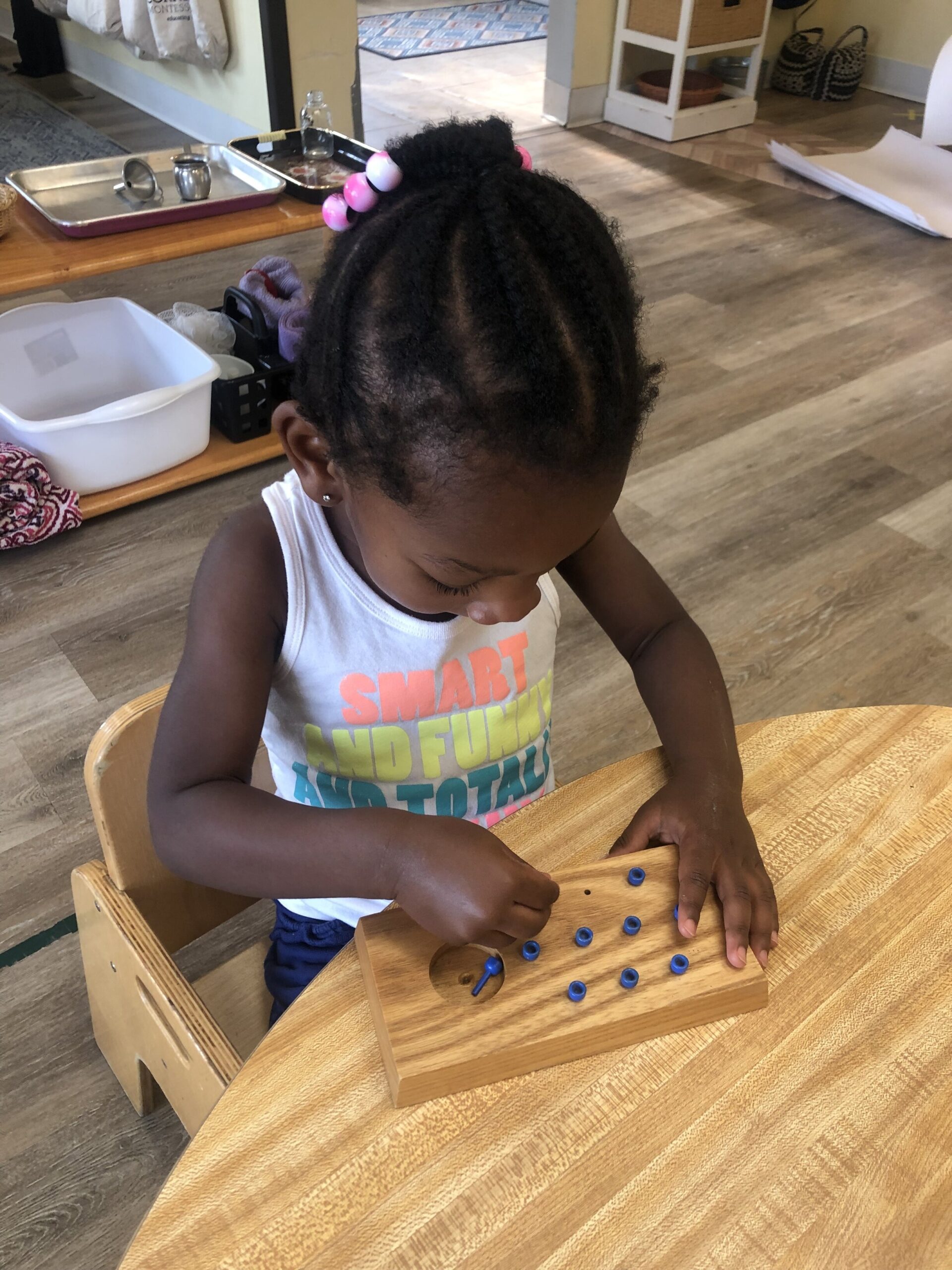
As soon as you enter a classroom, you know that something different is afoot. Montessori classrooms are immediately recognizable. You will see children working independently and in groups, often with specially designed learning materials; deeply engaged in their work; and respectful of themselves and their surroundings.
The Montessori Method fosters rigorous, self-motivated growth for children and adolescents in all areas of their development—cognitive, emotional, social, and physical.
Benefits of Montessori
-Beginning at an early age, Montessori nurtures order, concentration, and independence. Intentional classroom design, materials, and daily routines support the student’s emerging “self-regulation” (the ability to educate one’s self, and to think about what one is learning), in toddlers through adolescents.
-Students are supported in becoming active seekers of knowledge. Teachers provide environments where students have the freedom and the tools to pursue answers to their own questions. Internal satisfaction drives the child’s curiosity and interest and results in joyous learning that is sustainable over a lifetime.
-Montessori supports social-emotional skills. Contemporary research supports the 100-year-old Montessori Method’s effectiveness, indicating that children who learn in Montessori classrooms demonstrate stronger social-emotional skills in many areas than children in more traditional environments.